Listening Opens a Door to Hope
What difference can a conversation make?
In July, during our SALT training and community engagement work in Tana River, Kenya, local facilitators set out to do something remarkably simple: visit households, listen well, and discover the strengths, hopes and concerns already present within their community.
They could not have known that one of those conversations would uncover a hidden struggle and become the beginning of a journey of hope.
A Story Waiting to Be Heard
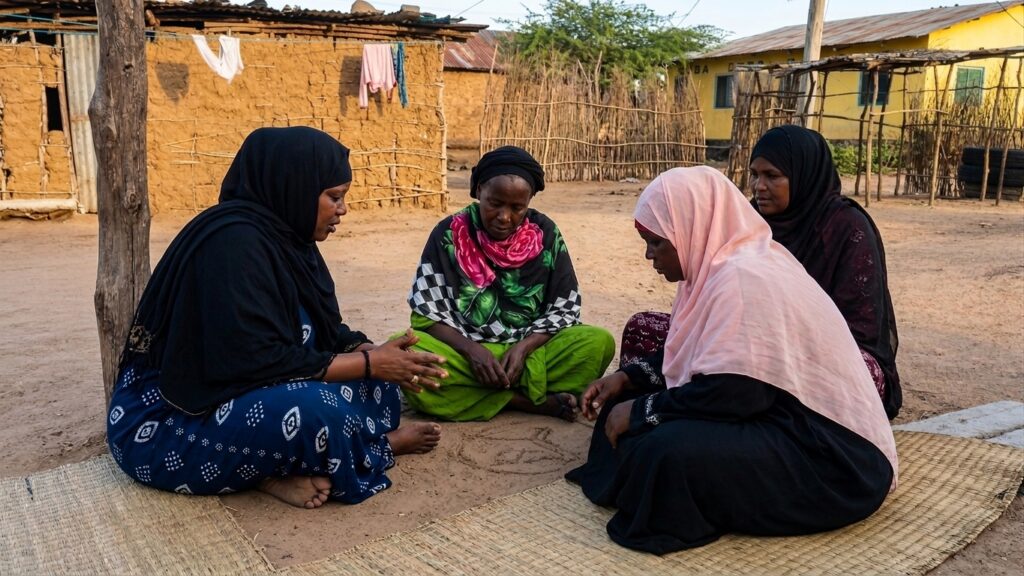
In Kibuyu village, a team of newly trained SALT facilitators were making household visits. Their goal was not to arrive with solutions, but to build relationships, listen carefully and encourage communities to identify their own opportunities for change.
During one visit, they met a young woman whose quiet strength masked a heavy burden.
At just seventeen years old, she was navigating motherhood alone. An orphan and survivor of gender-based violence, she had little support around her. Her young son had been born with a serious medical condition requiring specialist treatment, but without income, resources or family support, accessing healthcare felt impossible.
For more than a year, she had carried this challenge largely in silence.
As the conversation unfolded, however, her story began to emerge.
What appeared to be a routine household visit became something much more significant.
The Power of Listening
One of the key principles of SALT is that meaningful change begins by listening.
Rather than rushing past the conversation or viewing the situation as somebody else’s responsibility, the facilitators took time to understand her circumstances. They recognised both the urgency of the need and the importance of connecting her with people and structures that could help.
The facilitators shared the situation with SALT Project Coordinator Yusuf Maro, who helped guide the next steps. Working alongside local community structures, they connected the mother and child with a Community Health Promoter and ensured they were registered for support.
Crucially, they did not try to solve the problem alone.
Instead, they acted as bridge-builders, helping to bring together the people and resources already present within the wider community.
From Isolation to Support
As word spread through local networks, support began to emerge.
Eventually, assistance was secured through SUPKEM, enabling the family to access urgently needed medical care. The young boy was admitted to hospital in Mombasa, where he underwent surgery and continues to receive treatment.
For the young mother, the impact went far beyond financial support.
For the first time, she no longer had to carry the burden alone.
Reflecting on the help she received, she shared words of heartfelt gratitude:
“If God had not brought me together with you, I don’t know if I would be here at the hospital today. Without God and without you, I don’t know where I would have ended up.”
Her story is a powerful reminder that hope often begins when somebody takes the time to listen.
What SALT Makes Possible
This story is not ultimately about funding, surgery or even a particular intervention.
It is about connection.
The SALT facilitators did not perform medical procedures. They did not arrive as experts with all the answers. What they did was notice. They listened. They recognised a concern that had remained hidden. And they helped connect one vulnerable household with the relationships, services and support that already existed around them.
Through those connections, a young mother was supported, a child received treatment, and a family found hope.
This is what SALT seeks to encourage: communities discovering their own strengths, responding together to local challenges, and creating pathways for positive change.
A Knock on the Door
The young boy’s journey is not over. He continues to receive treatment in Mombasa, and there are still challenges ahead.
But today his mother is no longer facing them on her own.
What began as an ordinary household visit became a pathway to care, support and hope.
And perhaps that is one of the most important lessons from SALT:
Sometimes community transformation begins with something as simple as knocking on a door, listening to a story, and refusing to walk away.
This story emerged from household visits conducted by local SALT facilitators following Amplifying Voices’ community engagement training in Tana River, Kenya. It offers a powerful example of how listening-first approaches can uncover hidden needs, strengthen local networks and help communities discover pathways towards hope and change.