Digital community radio inspires digital detox!
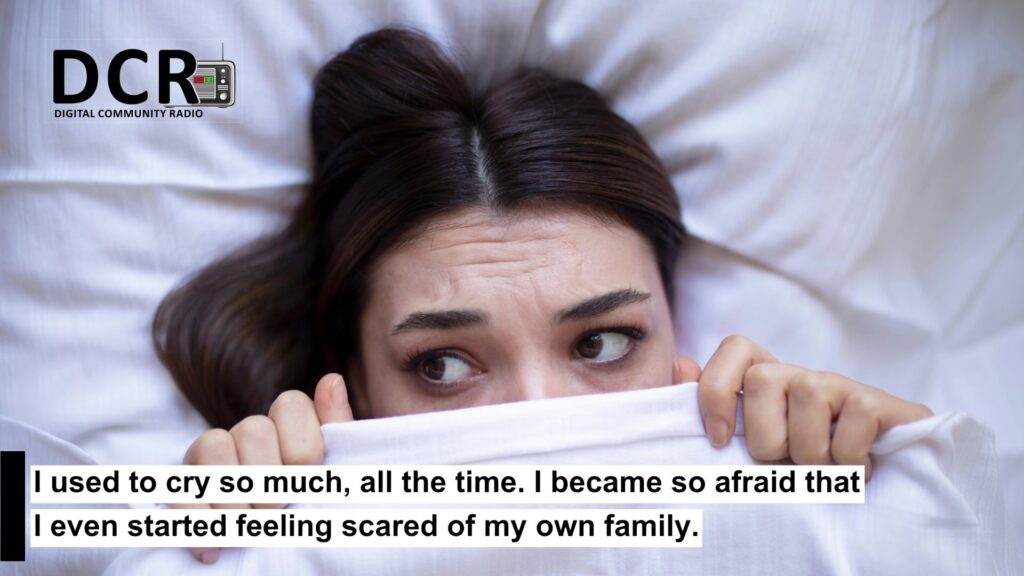
(photo above is a stock image, re-used from Amplifying Voices Pakistan DCR video)
This is Sarah’s story.
Like a growing number of young people in rural Pakistan, Sarah has a smartphone. As is also the case for many young people, her smartphone has not always been good for her mental health.
Before we start …
Sarah and her family belong to the Christian minority community in Sargodha. Sargodha is in central Punjab region. Sarah came across Hazeen Latif and Amplifying Voices Pakistan through the Roshan Ghar (Bright Home) project operating near her home in Sargodha. In Sarah’s context, it is normal for younger people to refer to an older man like Hazeen as Uncle or Sir.
It is also helpful to know that Amplifying Voices Pakistan started a new story-sharing project about a year ago, called Digital Community Radio (DCR). DCR makes short videos for social media, connecting expert voices and local stories from several different communities where Amplifying Voices Pakistan works. Amplifying Voices Pakistan is registered as HCR Foundation and is referred to by both names in the story.
We could continue to tell you the story about Sarah. We could re-interpret her story, so it better fits our understanding of mental health and mental health treatment. But we have an opportunity today to let Sarah tell her story, her way. Sarah first told her story on DCR – and refers to an earlier DCR episode which aired a conversation with a mental health expert. She also invites her father to tell part of the story. So let’s hand over to Sarah and her father:
Sarah: Greetings everyone. My name is Sarah Rafique, and I suffered from depression. So now I want to explain how it started. First, I became very scared and fearful. The reason I became so afraid was that I saw some pictures [on my phone] that disturbed me a lot. Because of that, I started feeling like something heavy was happening to me mentally. I used to think that, as people say, when a person is in depression, their mind makes them feel that whatever thoughts they think about start happening to them automatically. I used to cry so much, all the time. I became so afraid that I even started feeling scared of my own family. I was scared of myself, scared of every person, and scared of everything around me.
Elder: My name is Elder Rafique, I am Sarah’s father. On the 25th of the 12th month, her condition became very bad. She developed a mental health problem.
Sarah: I used to say that I wanted to run away from here. Because of this, my family would lock the doors at night before sleeping, thinking that I might actually run away. I would sleep saying “I am going to run away,” and they believed I might really do it. I was always trying to find a way to escape from there. I had become so fearful that whenever I saw a new person, I would start crying and feeling scared. I stopped going to gatherings, stopped attending events, and never went out anywhere. I left my friend circle, left my dentist department, and separated myself from everything.
Then one day, I was crying very badly – non-stop. My sister works with HCR, and she was talking to Sir Hazeen on the phone while I was crying. She told him all about my condition and how badly I was crying. Sir said, “Let me talk to her.” I said that I did not want to talk, but he insisted. Api [big sister] Rimsha put the phone close to my ear while I was crying. Sir started praying for me, and as soon as he started praying, I suddenly stopped crying. I immediately felt normal again. I don’t know how it happened, but I suddenly became calm and normal. Later, they also said that even they did not fully understand the reason, but they believed that I had become frightened because of those pictures. They advised that I should not be allowed to use the phone. After his prayer, I felt better immediately and became normal again.
My family also took me to the doctors, and the doctors gave the same advice – they said I should not be allowed to use the phone.
Elder: Sarah, my daughter, used to use her mobile phone a lot. Even when we tried to stop her, she would still use it. I would also get angry in the morning when she put hands-free in her ears and used the phone all day. Sometimes she would stop for a short time when I told her, but later she would again take the phone and start using it. Because of this, marks appeared on her face and her skin colour also changed.
Sarah: I had become better, but I still kept thinking that maybe this could happen to me again in the future. So I started doing something else. I started playing games. I downloaded games on my phone and played all day and all night. My family would hide my phone and take it away from me, but I would still insist and keep trying to play games. When my battery got low, I would put it on charging. My family hid their phones from me – I would watch where they kept them. Then I would take my sister’s or brother’s phone, download games on it, and start playing again.
Elder: Actually, she had a game on her phone and she used to play it all the time. She would play for many hours at a time. If we took the phone away from her, she would insist on getting it back, search for it, or take another daughter’s phone so that she could continue spending her time on the phone. Because of this, her mind was affected, and we faced a lot of difficulties and problems because of it.
Sarah: Then it happened that one day my sister showed me a program from DCR where Sir Hazeen and a doctor were talking. They said that gaming is an addiction that can destroy a person. Once someone gets addicted to games, they keep playing them again and again, and it becomes like a drug that takes control of a person’s life.
Let’s take a quick pause there to see part of the transcript from the DCR show that Sarah watched … Dr Hammad Hassan explained to Hazeen in the studio, how dangerous too much screen time can be, how it affects children’s minds and how it can slowly damage their personality.
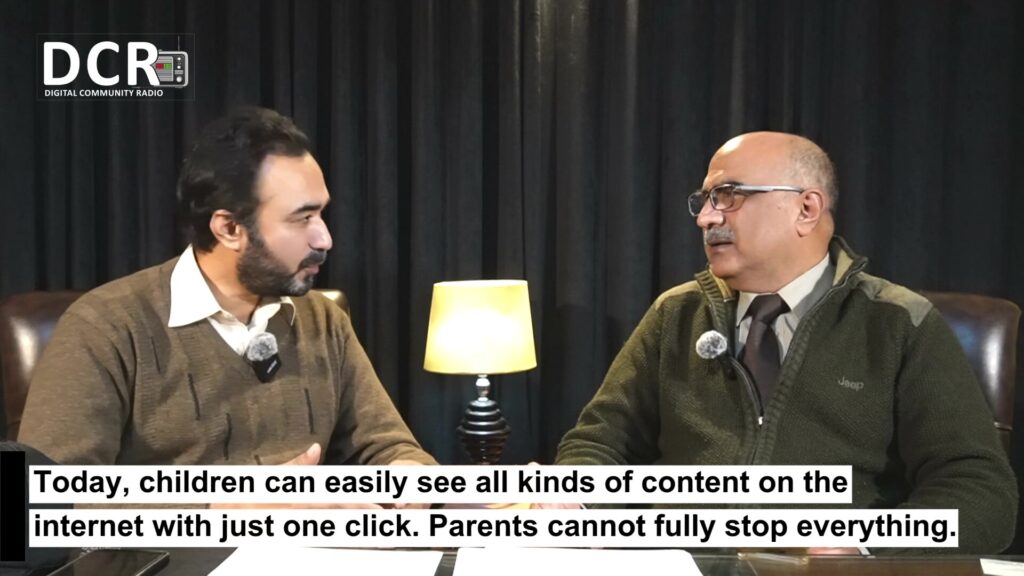
Dr. Hassan: Today, children can easily see all kinds of content on the internet with just one click. Parents cannot fully stop everything. If your child is addicted to mobile phones, the first step is to slowly reduce phone use. This is called digital detox. Another good idea is to make the dining area a mobile-free zone, where nobody uses phones during meals.
Thirdly, you should also limit mobile phone use at home. Fourth, make a fixed schedule for mobile phone use. Fifthly, an important thing is that parents should also check what children are searching, watching and studying online.
Hazeen: Before the recording, we were talking about online content. I want you to explain more about how mobile content affects the brain and personality of both children and adults.
Dr Hassan: For now, we are talking about children, because they often believe that many things the watch online are real, and bad or unrealistic content can negatively affect their minds.
For example, children may start feeling unhappy, hopeless or think they are not good enough compared to others they see online.
And let’s return to Sarah and Elder for the final words of this story – or rather, the starting words for the next chapter of Sarah’s story.
Elder: But then we had her listen to the Roshan Programme that was being aired. I am grateful to Sir Hazeen for creating such good programmes and broadcasting them in Roshan Ghar (DCR), so that people can listen to them and improve their lives and live in a better way.
Sarah: I’m very happy that the people from Roshan Ghar and HCR make such health programmes for us. Even those people who cannot go out or go to hospitals can change their lives through these programmes. They serve people, they think about us and they try very hard to help us get better.
And my message to my viewers who are watching and listening to my video is that you should also watch these programmes so that your life can also change, just like mine has changed today. You should pay attention to your health and follow these programmes. There is a lot to learn from them. Thank you so much.