Getting about with Gaza transportation
Most of us probably have probably felt frustrated by public transport at some point. However, in Gaza, transportation is a severe difficulty – one of several that people face daily. Many roads are unusable, fewer vehicles are available, oil and fuel are scarce, and there is a severe lack of cash for paying your fare. Tensions are high between community members and those who provide transport, so Radio Insan has been out listening the different sides of the story.
Radio Insan
Since the end of February, two teams of content producers have been working full time on the Gaza Humanitarian Radio project, now called Radio Insan (or Radio of the Human). One team is based in Gaza City, and the other team based in the West Bank. With the sensitivity of the context, all content has to be designed carefully and pre-recorded. Despite these constraints the teams are working hard to develop an “As Live” sound and impact.
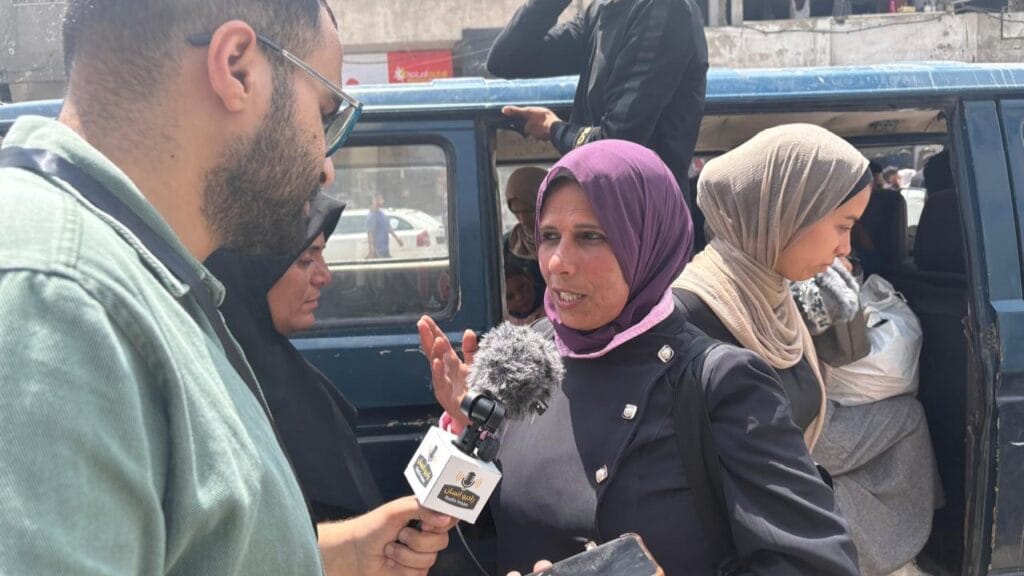
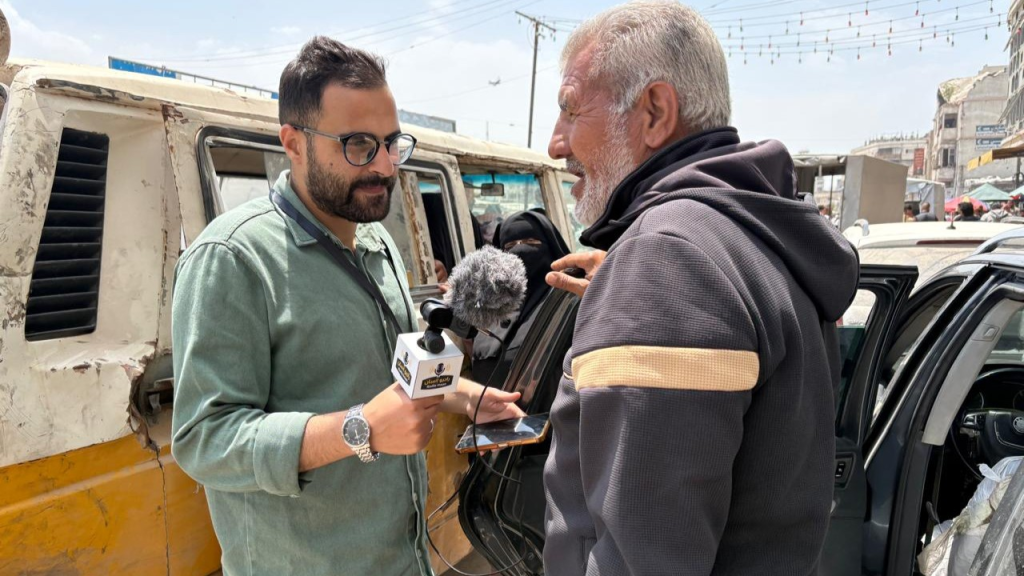
In Gaza, the team goes on to the streets and talks directly with community members. In the “Bayn Alnas” or “Among the People” features, a radio journalist asks local people about their opinions and experiences with a current hot topic. This week’s episode on transportation aims to help drivers and passengers to understand each other better, while also advocating for both groups to get better access to internet, cash and vehicle maintenance products.
In the West Bank, the team captures interviews with experts and hotline operators – people that Gazans want to hear from, but who cannot get into Gaza. This week we heard a hard-hitting interview with someone from SAWA, an organisation that runs a mental health hotline. The interviewee talked about increasing numbers of people calling to talk about having suicidal thoughts, as people realise just how much they lost during the war.
Gaza has dropped out of the news recently, but daily life continues and people are striving to survive. While we cannot say yet how effective these radio programmes have been, we wanted to share voices from the Bayn Alnas feature to bring some of daily situations to life and keep Gazans present in our thoughts.
Gaza Transportation – Options and Constraints
- The available options for public transport are:
- Taxis
- Cars towing an open trailer
- TukTuks (motor-rickshaw)
- Cash is very difficult for people to access, especially in smaller denominations (e.g. 10 shekel coins, or approx. £2.60). Banks charge a huge premium for people to withdraw hard cash. People are trying to get by using mobile money apps on their phones to transfer money.
- Gaza only has 2G mobile internet. In the UK, we use 4G or 5G mobile internet. 2G is very slow and does not provide a secure connection. People in Gaza need to be near a WiFi hotspot to be able to transfer money. This means people may not be able to use the app to pay for their ride on arrival – and drivers do not want to take passengers’ word that they will pay later.
Extracts from Bayn Alnas interviews:
Interviewer: Welcome. In your opinion, what is the cause of the transport crisis in the Gaza Strip?
Man 1: Well, several things. First of all, the roads. Fuel is expensive. There are no roads where a car can travel quickly and easily. It’s very complicated. The population density, the destruction…
Interviewer: Right. What do you feel is the biggest problem you face regarding transport?
Man 1: First of all, for us, the issue of liquidity, change, and the lack of small coins—specifically the 10-shekel coin—is the real crisis. … Whoever hoards currency is like someone hoarding food supplies …
Woman 1: Well, the transport crisis is due to the sheer number of people. There is no change to begin with, and you can’t ride using an app. Life is exhausting. As you can see, what can I say? There is no life. We are living a living death, by God, my son. Those who die can rest; they know their destiny is Heaven. But we die every day, by God, my son. To be honest, sometimes you ride a cart and cars pass so close they almost crush your feet. They fly by just wanting to collect money and app fares. We just pray that God changes this situation for the better.
Interviewer: What is the biggest problem you personally face regarding transport?
Driver 1: Regarding transport, first of all, it’s liquidity. I own a car that works on the commercial route, and right now it’s parked because of the oil. Today, a litre of motor oil costs 1,500 shekels (£400). My car runs on diesel. Today, diesel costs 35 shekels per litre (£10). I suffer from all of this, and we make no profit. If the car gets a flat tire, you can’t even afford to fix it. The tire repairman tells you, “My friend, you need a whole new tire.” So you’re forced to park the car.
Woman 2: As a woman coming from the Jabalia camp, I suffer. Instead of a trip taking about an hour, it takes nearly three hours. My daily business gets disrupted a lot because transport is very difficult here in the north. May God bless the brothers—they provided us with free transport to the northern Gaza Strip, specifically to Jabalia. It helped us and eased the burden on us as citizens so we wouldn’t struggle with commuting. I mean, when you try to get a ride, they make it difficult. One driver tells you he doesn’t accept digital wallets, another says he needs exact change. Excuse me, but where are we supposed to get it from if it doesn’t exist? … I’ve been standing for an hour waiting for transport to reach the port, and no one wants to take us because of the app system. Everyone tells me “cash only.” Well, where am I supposed to get cash from?
Interviewer: Right. What do you think of Tuk-tuks?
Woman 2: As for Tuk-tuks, I have suffered a lot from them. I’ll tell you about something that happened right in front of me once. A woman was riding a Tuk-tuk, the driver was speeding of course, and the woman fell out. This incident happened right in front of me. Also, for us in the winter, Tuk-tuks aren’t fully covered from above. Once, I was riding with my children, and we all came home completely drenched from the rain.
Interviewer: I want to ask you, what do you think is the cause of the transportation crisis in the Gaza Strip?
Man 2: Look at the crisis of the 10, 5, and 2 shekel coins. This is what we used to ride and commute with, today they don’t exist.
Interviewer: And what else?
Man 2: You give him a 20 shekel note, and he thinks you’re a scammer. He starts looking at you from head to toe. “No, sir, take it and deduct from it,” then he’d tell you he has no change. Well, should the citizen bring change or the driver? No, the citizen… no, the citizen wants to get a ride, the driver is the one who should meet his needs. Am I not paying you to take me? And you drop me off on the way, telling me, “May God help you, just walk the remaining 500 meters.”
Man 3: The cause of the transportation crisis is the small change, first of all. You don’t always have change with you, and we suffer from this transport story. Now, everyone uses the mobile app, so why don’t they set up Wi-Fi hotspots for us? Or, for example, force the drivers to accept it. I mean, sometimes a woman doesn’t have change, so the driver refuses to give her a ride. There are also sick people who need to go to hospitals but have no transport money or change, so the drivers refuse to take them. We demand that the competent authorities set up internet hotspots so that people can manage their affairs. This situation is unacceptable. I mean, whoever doesn’t have change is left stranded. Even if he has a 50 shekel note, the driver won’t accept to take him, and excuse me, even the driver often has plenty of change.
Interviewer: I want to ask you, what is the biggest problem you face personally?
Man 3: First of all, the crowding of transportation, and excuse me, those transports that pull trailers behind them. Excuse me, he feels like piling people on top of each other, even women next to a woman or next to a man. There is no shame anymore in this regard. I mean, he might put three or four people on the trailer behind. Even if the space is just enough for you, he goes and pushes you, or pushes a woman between you, embarrassing her and embarrassing you. This is a problem that causes a lot of annoyance.
Interviewer: Does it make you late for your work, for your shift?
Man 3: Naturally, yes. We get late for work because you don’t have change, so you are forced to walk, because the driver won’t accept a 20 shekel note from you.
Man 4: Well, the transportation crisis is difficult, that’s first. Second, they barely, barely, barely accept payment through the app. They want change; they are hoarding change now, they and the bread sellers.
Interviewer: Well, in your opinion, if your voice could be heard, what do you think is the solution to the transportation problem in the Gaza Strip?
Man 5: The back trailers! You have to find a solution for this trailer.
Man 4: My friend, prices are high and may God help everyone with their situation, but the most important thing is to get rid of the trailer for us because this trailer creates a crisis for the elderly, for children, for everyone. Someone with a slipped disc refuses to ride it, someone with a platinum implant can’t ride it, for everyone. I mean, things are clear. This trailer issue is very difficult for the elderly, for children, for everyone. Even for old women and girls, it is very difficult.
Interviewer: I want to ask you, what is the biggest problem you face because of the transportation issue? For example, are you late for work? What problems is it causing you?
Man 5: The issue of [app] transfers.
Man 4: No, it’s not just a transfer issue. You have the car, instead of having four passengers, all 30 must ride. All 30 must be there for you to go to your work. For example, if your work starts at 8, you have to leave at 5 in the morning just to complete the number of passengers, and this is what we want to cut short.
Interviewer: Tell us, in your opinion, what is the biggest problem you face as a driver regarding transportation in the Gaza Strip?
Driver 2: The biggest problem currently is the change, and we also face a problem with passengers who use the app, who tell you “we will transfer to you” and then get off, and the issue of the 3 and 5 shekels. Anything under 10 shekels, because most passengers, I mean… they don’t transfer at all. After he gets off, he doesn’t transfer to you anyway.
Interviewer: Okay. Well, in your opinion, if your voice were heard, what do you think could be a solution to the transportation crisis in the Gaza Strip?
Driver 2: The best solution for this crisis is to provide an app that is faster than the internet and things like that.
To keep things brief, we removed the introductions and greetings from the quotes. However, if an interviewee were writing this article, he or she would probably now close by saying:
“May God give you health, my friend”